
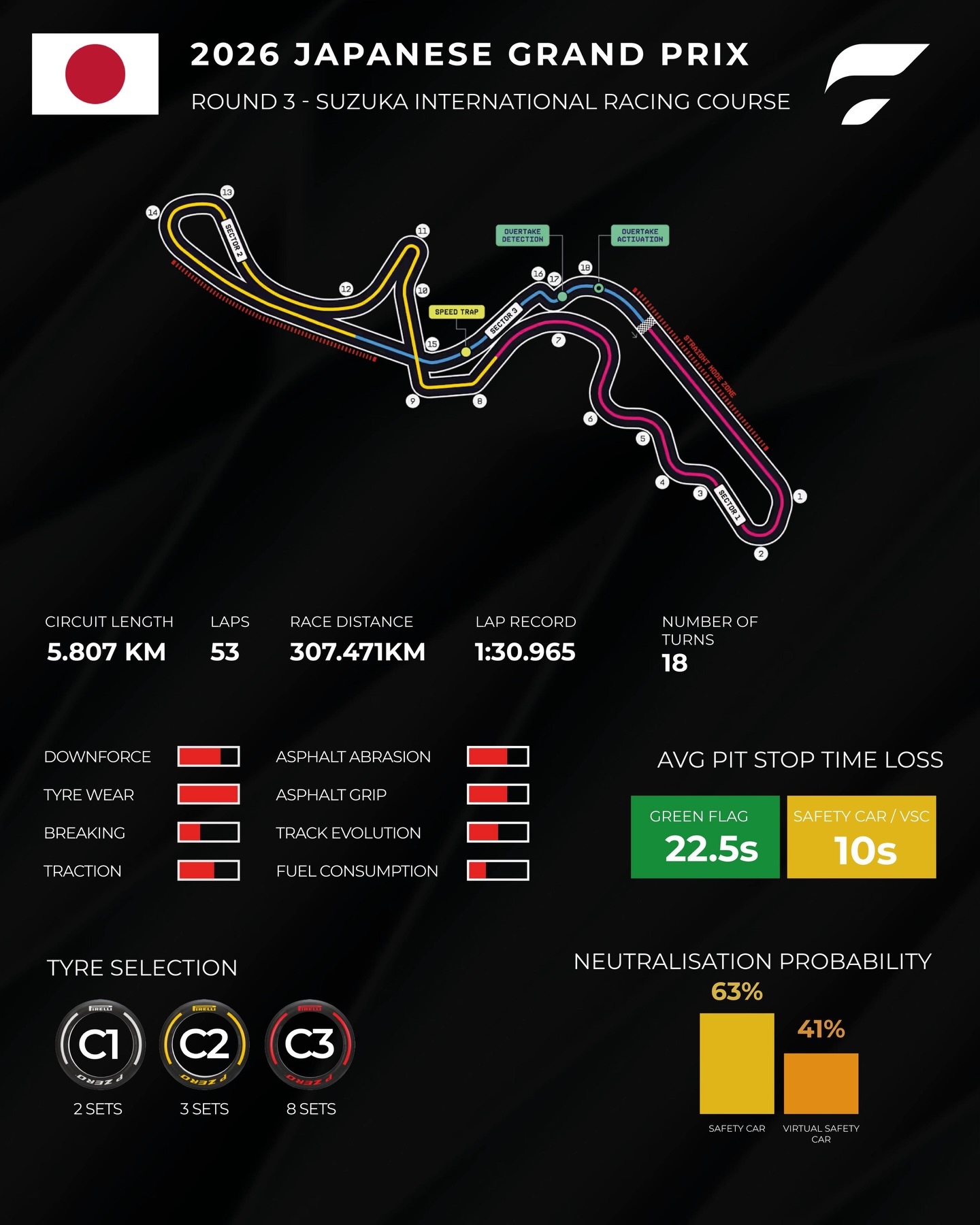
The anticipation is building as track infos for the upcoming Japanese GP take center stage. With the next round set at the renowned Suzuka International Racing Course, fans and teams alike are preparing for one of the season’s most iconic events. The circuit’s distinctive layout and technical demands promise an exciting spectacle for motorsport enthusiasts.
Key Track Infos for the Japanese GP
The Suzuka International Racing Course is famed for its challenging design, boasting a circuit length of 5.807 kilometers and a total of 53 laps, making up a race distance of 307.471 kilometers. The track features 18 turns, each offering unique challenges in terms of downforce, tyre wear, and traction. The current lap record stands at an impressive 1:30.965, setting a high bar for competitors looking to make their mark.
Tyre Selection and Race Strategy Insights
Tyre selection is crucial at Suzuka, with teams opting from C1, C2, and C3 compounds. The allocation includes two sets of C1, three sets of C2, and eight sets of C3 tyres—choices that will play a pivotal role in race strategy given the circuit’s high asphalt abrasion and grip demands. With significant tyre wear expected, careful management will be essential throughout the Grand Prix.
Strategic pit stops are another vital element at this event. Under green flag conditions, an average pit stop time loss is 22.5 seconds, while safety car or virtual safety car periods reduce this to just 10 seconds. This dynamic could influence key decisions during the race as teams look to capitalize on any opportunities that arise.
Neutralisation Probability and Circuit Features
The Japanese GP at Suzuka often sees a high likelihood of race interruptions, with a safety car probability of 63% and a virtual safety car probability of 41%. These statistics underscore the unpredictable nature of this circuit and highlight the need for adaptable strategies from both drivers and engineers.
With its blend of fast straights, technical corners, and legendary status among racing circuits, Suzuka continues to be a highlight on the calendar. As teams analyze every detail from downforce levels to fuel consumption and track evolution, all eyes remain fixed on how these track infos will shape the outcome of the upcoming Japanese Grand Prix.